
Authors: Maame Akua Amoah Twum and Elkanah Taylor
Site of the publication: afrobarometer.org
Type of publication: Survey
Date of publication: February 2026
Key Findings
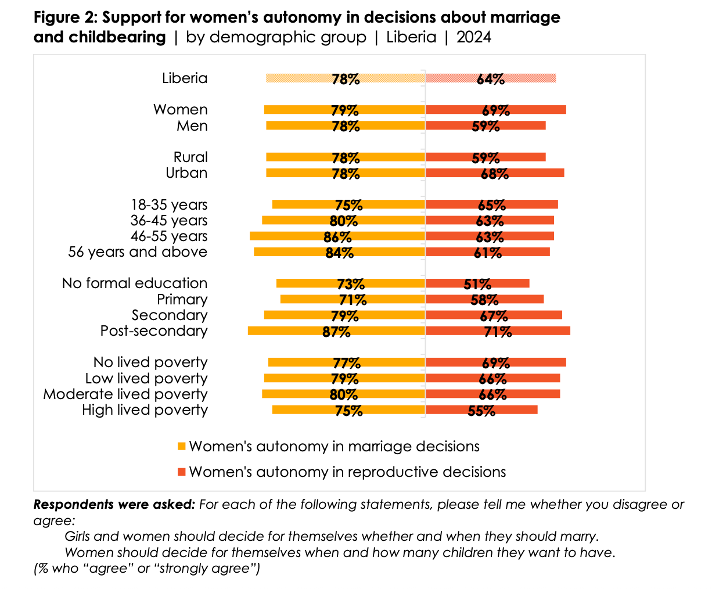
- Large majorities of Liberians say women should be able to decide for themselves whether and when to marry (78%) as well as when to have children and how many children to have (64%).
- Men match women in their support for women’s autonomy in choices about marriage but not in decisions about childbearing (59% vs. 69%).
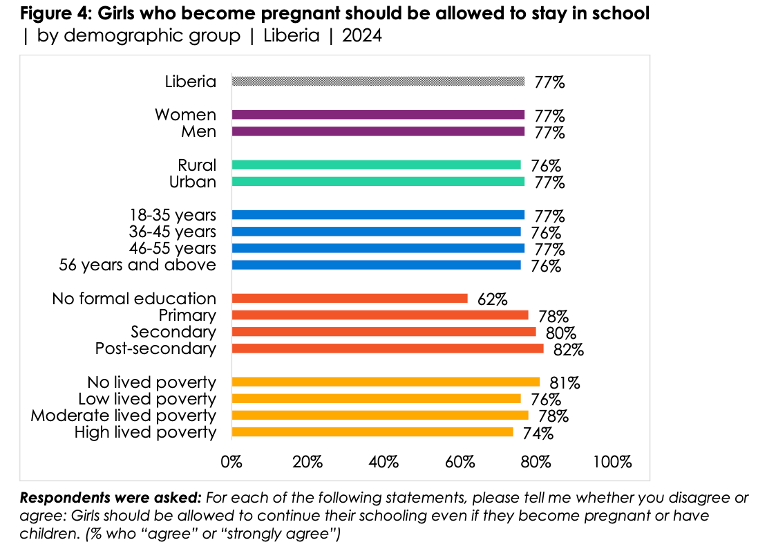
- More than three-fourths (77%) of Liberians say pupils who get pregnant or have children should be allowed to continue their schooling.
- More than eight in 10 (82%) endorse the teaching of sex education in school.
- About six in 10 citizens say contraceptives should be made available to anyone who is sexually active regardless of age (59%) and marital status (56%).
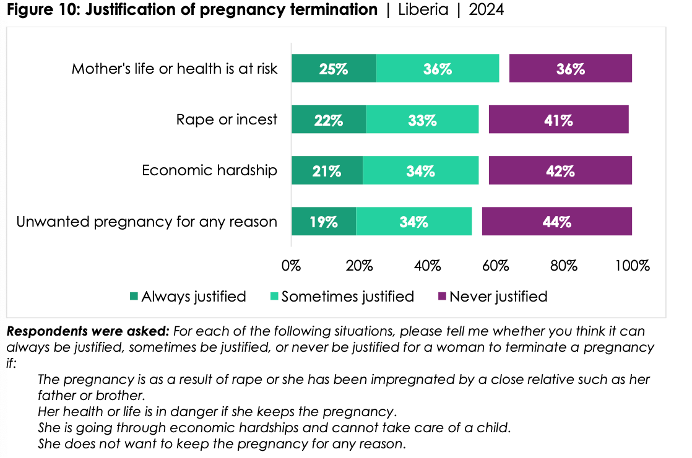
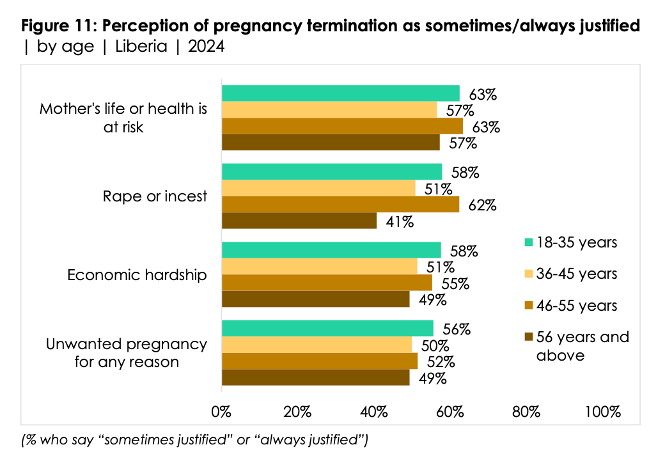
- Six in 10 Liberians (61%) see terminating a pregnancy as “sometimes” or “always” justifiable if the mother’s life or health is at risk.
- More than half say abortion can be justified in cases of rape or incest (55%), if the woman is economically unable to care for a child (55%), or if the pregnancy is unwanted “for any reason” (53%).
Women’s autonomy in marriage and childbearing decisions
More than three-fourths of Liberians say that girls and women should be able to decide for themselves whether and when to marry. Highly educated citizens are more supportive than those with primary or no formal education. Regarding choices about having children, men are significantly less likely than women to endorse women’s autonomy.
The role of schools: Education for pregnant pupils and sexual education
Liberia’s teenage pregnancy rate is high: About one-third of girls aged 15-19 have begun childbearing, either through a current pregnancy or a previous birth, contributing to school dropout and limiting girls’ educational and economic opportunities. More than three-fourths of Liberians are in favor of allowing pupils who become pregnant or have children to continue their education.
Eight in 10 Liberians also endorse the teaching of sexuality education in schools. But rollout efforts have faced significant implementation challenges. Stakeholders, have highlighted a lack of adequate teaching materials and teacher training.
Access to contraceptives
A majority of Liberians support the idea of making contraceptives available to anyone who is sexually active regardless of age. But 39% disagree with this approach. Women are more supportive. Support for making contraceptives available regardless of age is somewhat lower among youth than among their elders. Among youth, more women than men endorse making contraceptives available.
Liberia’s teenage pregnancy rate is high: About one-third of girls aged 15-19 have begun childbearing, either through a current pregnancy or a previous birth, contributing to school dropout and limiting girls’ educational and economic opportunities. More than three-fourths of Liberians are in favor of allowing pupils who become pregnant or have children to continue their education
View on pregnancy termination
A quarter of Liberians say women and girls in their community “often” terminate their pregnancies, and another 30% say they do so “occasionally”. Six in 10 Liberians say abortion can “sometimes” or “always” be justified if the mother’s life or health is at risk, while 36% disagree. More than half say abortion can be justified if the mother does not want the pregnancy “for any reason”. Youth are more likely than senior citizens to consider abortion justifiable in all four of these circumstances. more women than men consider termination acceptable for reasons of economic hardship.
Conclusion
Liberians strongly support women’s autonomy in marriage and reproductive decisions. Most endorse the teaching of sexuality education and want girls to stay in school even if they become pregnant. More than half of Liberians believe that people who are sexually active should have access to contraceptives regardless of their age and marital status. Majorities also consider abortion justifiable if the mother’s life or health is at risk, if the pregnancy resulted from rape or incest, if economic hardship leaves the woman unable to care for a child, or if the pregnancy is unwanted “for any reason.”